
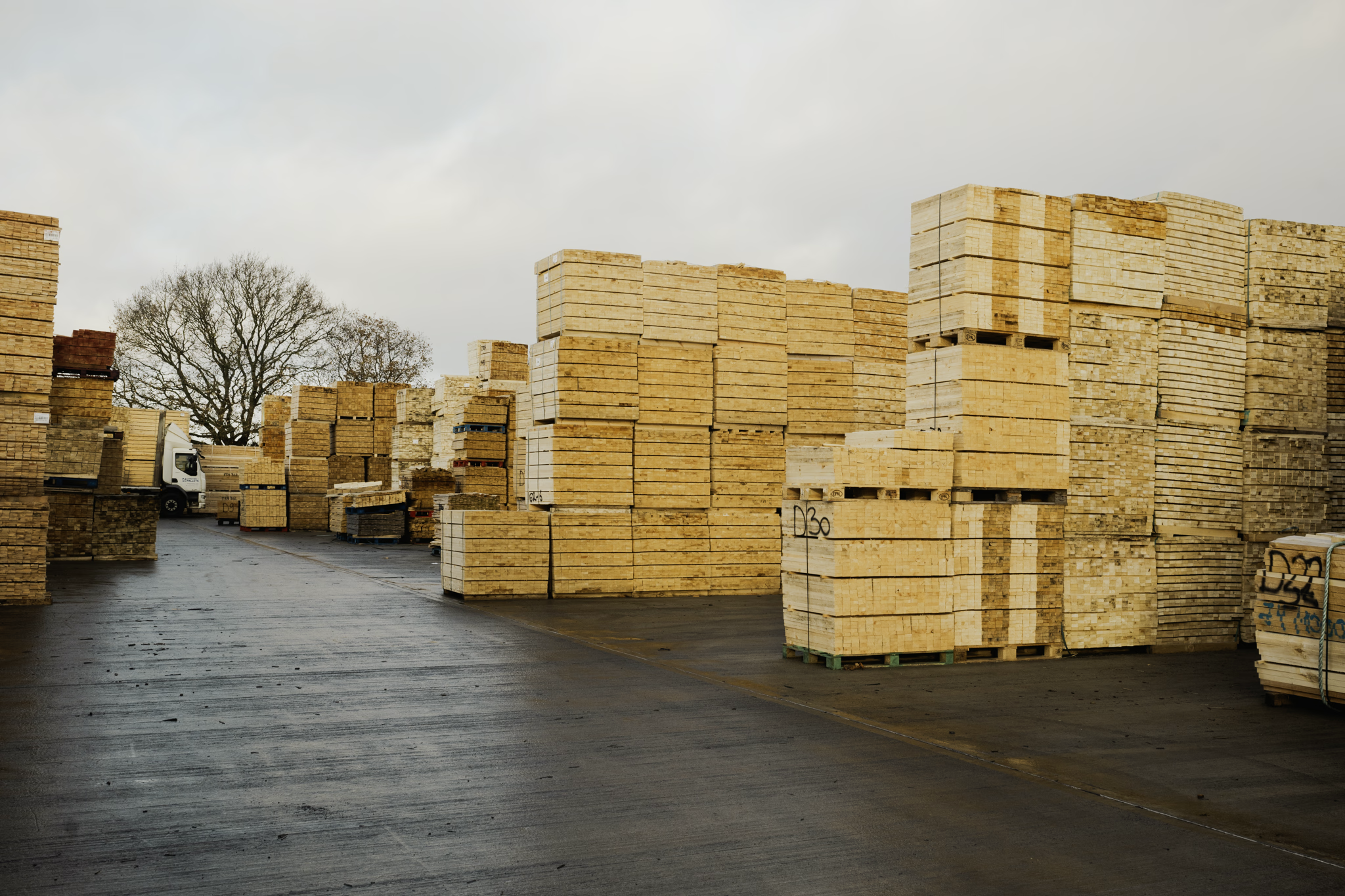
The global economy is currently facing serious challenges. War, knock-on effects from COVID-19, and price rises are all being felt across the world. The cost of fuel, food and natural resources has reached all-time highs, however, the price of one natural resource, timber, has stabilised since the start of the war in Ukraine. Price rises and pallet shortages are indicative of challenging market conditions, but as timber prices show signs of rising again, after entering a period of relative calm, will pallet prices increase further and is this a sign of what is to come? Is timber experiencing a ‘calm before the storm’? Junction 4 Pallets asked these questions to global pallet and timber experts who had mixed responses.
When speaking with US-based Rick LeBlanc, author of Pallets: A North American Perspective and writer for Packaging Revolution, it is obvious that America experiences different challenges to the United Kingdom when it comes to pallets.
Rick Leblanc says that the used pallet market in the United States is doing well despite the external economic issues.
“The U.S. has a vibrant refurbished pallet market, also referred to as the recycled pallet market, although “refurbished” would be a more accurate term. The recycled segment has been growing on an ongoing basis, although the latest survey from 2021 showed a 16.4% dip versus 2016, attributed to pallet users hanging onto pallets for reuse during the severe COVID pallet shortage versus letting the empties flow through to recyclers as they would have in normal times. The industry produced an estimated 280 million recycled pallets in 2021.”
Pallet shortages are an issue in the context of used pallets. Lack of used pallet flows are particularly rife in the UK at this current time. While common for the whole world during the COVID-19 outbreak, huge surges in British appetite for e-commerce and demand for pallets post-pandemic mean most pallet vendors, who do not have the means to produce new pallets, cannot fill this supply gap.
Much like the UK, Rick LeBlanc also says that external and material factors are affecting the pallet industry in the United States.
Rick Leblanc says:
“COVID-19 caused a dramatic spike. While prices have receded somewhat afterward, things such as labour rates went up during the Pandemic and have stayed up. Also, ongoing supply chain disruption, wildfires and tariffs continue to put pressure on material costs.”
The effects of supply chain disruption can be seen in other material costs such as cement and steel nails. The steady price increase in steel nails and cement in 2022, moving from 111.9 points to a record high of 165.2 in 2023 on the Eurostat producer price index, contrasts the increases in timber prices, where we see dramatic peaks and troughs from 2021 to 2024, until it levels out at a much lower price according to the European Federation of Wooden Pallet and Packaging Manufacturers (FEFPEB) 2025 timber price indices.
In a statement made in April 2025 by John Newcomb, CEO of the United Kingdom’s Builders Merchant Federation and Peter Caplehorn, the CEO of the Construction Products Association, confirmed construction product price rises:
“The price increases anticipated in our March report have been implemented, with most within the range of 3-7%. A few exceptions were reported, with PIR insulation increasing by 10%”
In a European context, Rob Driessen, Managing Director of Connec3 – a leading European pallet and packaging wood procurement group based in the Netherlands – adds that “beyond the geopolitical situation, energy costs, interest rates, and inflation, labour availability and labour costs are also impacting timber and pallet prices.”
“Labour shortages are not only affecting sawmill operations and pallet production, but also the transport sector. And transport is essential throughout the entire production chain—from logs to sawn timber, and finally to pallets.”
“The transport, sawmill, and pallet production sectors all urgently need more skilled workers, yet none of them are seen as particularly ‘sexy’ industries. This makes it even harder, especially as we anticipate renewed growth after two very difficult years.”
According to Driessen, timber and pallet prices are not only influenced by market factors:
“The past ten years have brought significant changes to our forests, largely due to global warming,” he explains.
“One major issue has been the increasingly dry and hot summers, which have led to explosive insect infestations, such as bark beetles. In some years, they’ve gone from two to as many as six generations in a single season – devastating large swaths of healthy forest. This has caused a major imbalance in many forested areas.”
Junction 4 sources timber globally and is acutely aware of the ongoing challenges in the industry that affect supply chains. These challenges, such as diseases and pests, threaten timber quality, and shipping delays at ports, have exacerbated shortages and increased costs caused by shortages.
Speaking about the measures taken by Junction 4 Pallets to counter supply chain challenges, Junction 4 Pallets’ international accounts manager, Brian Jeffrey, says:
“Junction 4 proactively reengineered its supply chain in 2019 to better navigate logistical hurdles, such as shipping disruptions, labour shortages, timber scarcity, global events, and ecological risks. The review program has now become a standard business practice. While Junction 4 is not immune to rising transportation and fuel costs, along with regulatory pressures, which contribute to price increases, these interconnected issues highlight the necessity of improving communication, adopting resilient practices, and prioritising sustainability.”
If you would like to learn more about the challenges facing the pallet and packaging industry, please get in touch today.