
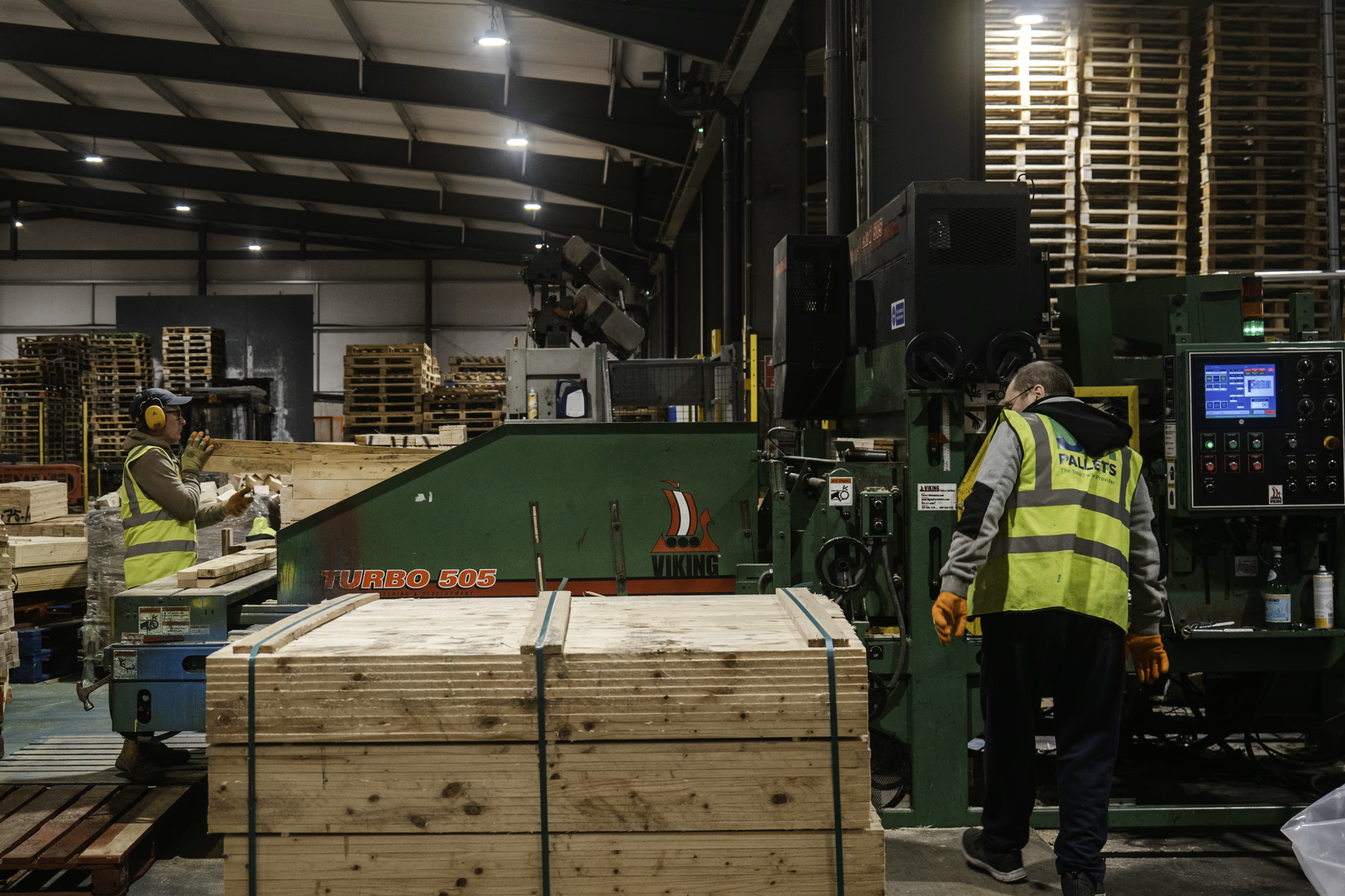
Labour shortages and the increased operating costs of manufacturing means producing pallets has become more challenging. We looked at how these challenges are met by businesses across the world and the ways pallet manufacturers are moving forward.
Automation
Automation in 2025 is quite hard to avoid. Artificial intelligence (AI) and the Internet of Things (IoT) has all but encompassed 99% of our daily lives. It is no surprise that AI and automation has entered the pallet world.
Automated pallet nailing lines are becoming increasingly popular. Automated nailing lines can improve cycle time by 15%, increasing production speed. Automation improves the quality and precision of the nail placement, which in turn, reduces the risk of protruding nails in the final product. Automated pallet production also reduces the overall labour cost and improves staff safety, taking away repetitive manual tasks that can increase the risk of injury. Automation also provides flexibility and allows for custom pallet design. Not only this, but it allows for companies to scale up their production when required.
Advances in automated pallet manufacturing equipment has meant that companies can also reduce their waste by utilising greater efficiency.
Recycled and Recyclable Materials
The future of pallet production willalmost certainly include recycled materials and reuse.Sustainable manufacturing is critical to ensuring environmental stability and the world has increasingly turned its attention to those growing, raising and producing goods using raw materials. UK and European Union legislation, known as EUDR, is now comprehensive and covers a wide range of materials associated with deforested material.
The popular trend towards reusing pallets has grown year-on-year, with the Timber and Packaging Pallet Confederation (TIMCON) stating that between 2015 and 2023 there has been a 40% increase in the repair and reuse of pallets.
RFID and GPS Tracking
Radio Frequency Identification (RFID) and Global Positioning Systems (GPS) are not just part of the future of pallet production, but part of the future of the world. As recycling, reuse and minimising environmental damage becomes more important, so does tracking assets. The move away from one-way packaging to reuse has meant companies make more expensive packaging, that is often built to last, resulting in a strong need for tracking and asset retrieval. If you couple that with the development of tracking technology, it creates a world in which assets are transformed from silent objects to equipment that talks back to you and provides a wealth of information.
RFID technology relies on tags and readers. The tags transmit the information, and the readers understand it for you. This information is then sent to a computer system that logs information in real time. This transforms supply chain asset visibility and reduced shrinkage of both high value cargo and the assets themselves. This type of tracking can be particularly useful when managing pallet stock for customers, providing pallet companies with the ability to manage vast quantities of assets quickly and easily.
Despite pallet manufacturing developing considerably over the last 20 years, automation and technological advances still need to be managed by real people, recycling and the amount of material recycled still has a long way to go to truly be considered sustainable and asset tracking technology requires time, money and skill to cement its position within supply chain companies going forward. The next few years will be undoubtedly interesting for pallet manufacturers and only time will tell as to where the industry will end up, but it is for certain that our landscape will change immeasurably.
If you would like to learn more about the future of pallet production, contact us today!